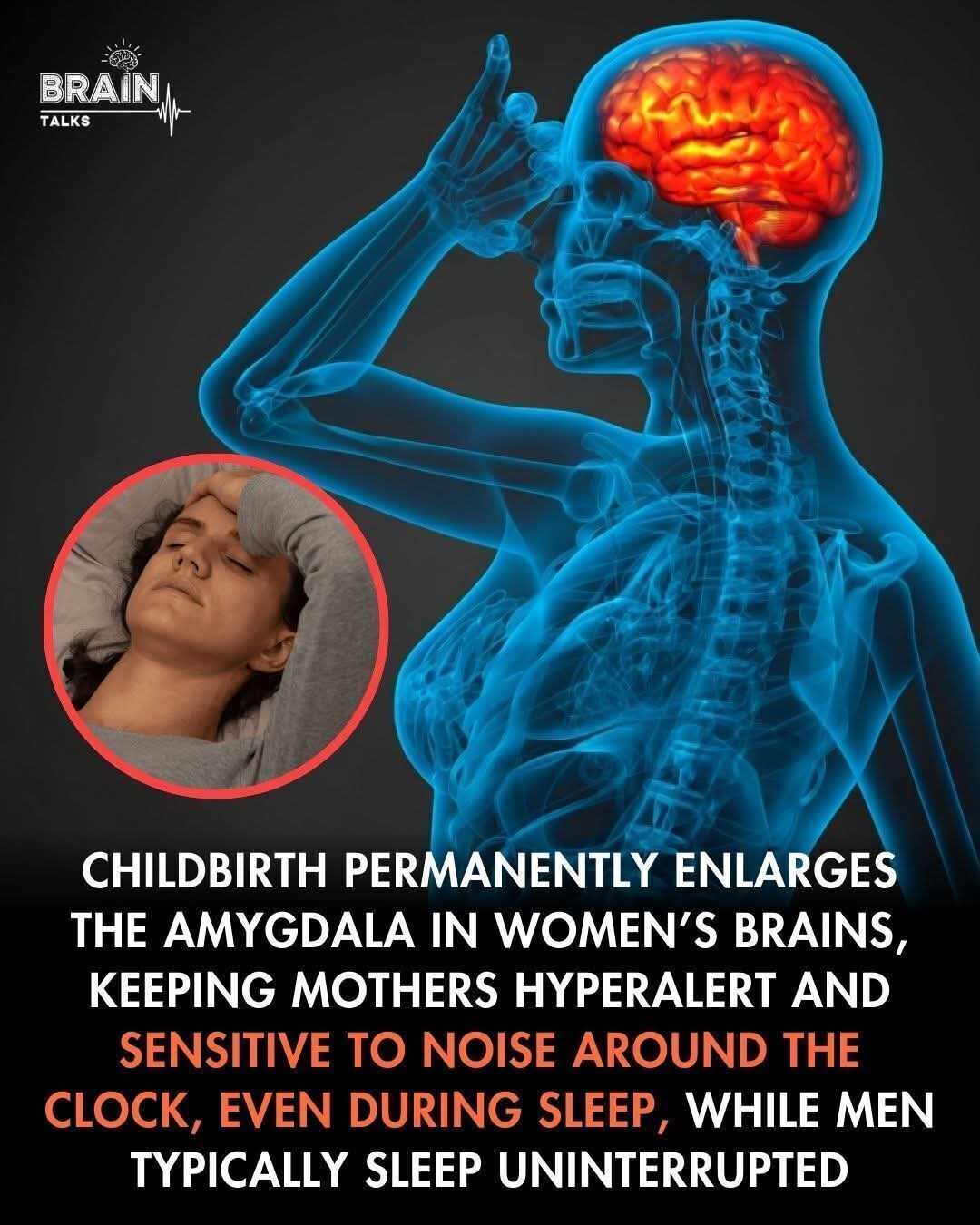

After giving birth, a mother’s brain undergoes remarkable changes to protect her newborn. Research shows that childbirth can cause permanent enlargement of the amygdala, the brain region responsible for processing emotions and threat detection.
This structural change heightens a mother’s sensitivity to sounds and environmental cues, keeping her on alert even during sleep. While men can often sleep through minor noises, new mothers may awaken to the slightest cry or movement, reflecting the brain’s adaptation to caregiving demands.
The amygdala’s hyperactivity helps mothers respond quickly to their infant’s needs, ensuring survival and safety. This heightened vigilance supports bonding, emotional connection, and rapid caregiving responses in early infancy.
The takeaway is clear: the postpartum brain adapts to prioritize infant care. Hyperalertness and disrupted sleep are not weaknesses—they are protective mechanisms designed to support both mother and child during critical developmental stages.
Source: Brain Talks