
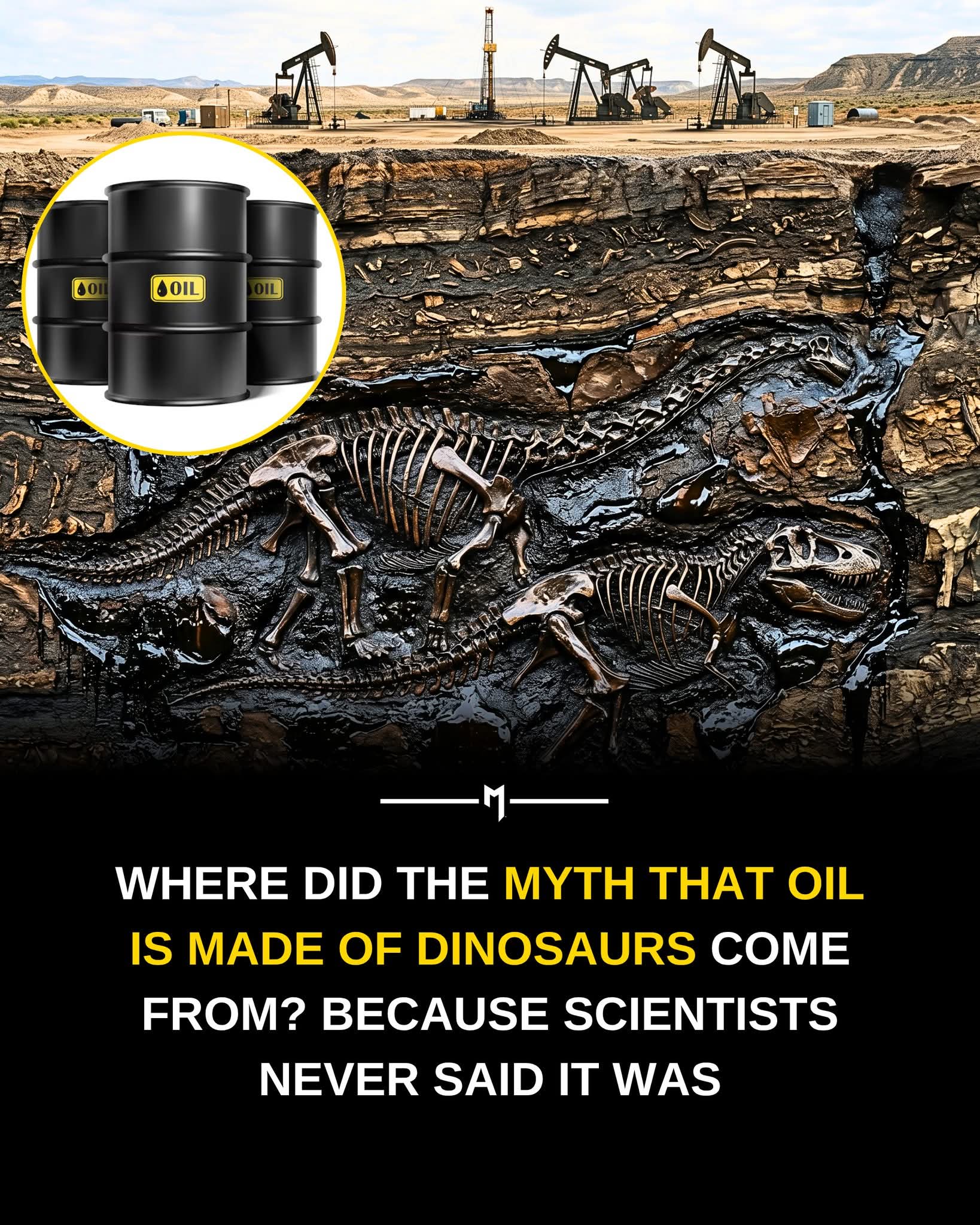

While the term "fossil fuel" makes it easy to imagine a T-Rex in your gas tank, the reality is much smaller.
Most of the oil we use today actually comes from trillions of tiny algae and plankton that filled the oceans hundreds of millions of years ago.
The Real "Oil Recipe"
When these microscopic organisms died, they sank to the bottom of the sea. Over time, they were covered by layers of sand and mud.
Under immense pressure and high temperatures deep underground, this organic "soup" slowly cooked into the liquid hydrocarbons we call crude oil.
Because dinosaurs lived on land, their remains rarely ended up in the specific underwater, low-oxygen environments needed to create oil.
Why Do We Think It's Dinosaurs?
The "dinosaur juice" myth is mostly thanks to clever advertising. In the 1930s, the Sinclair Oil Company began using a green dinosaur (an Apatosaurus) as its mascot to show how "old" and "reliable" their oil was.
Although much of our oil was formed during the Mesozoic Era (the age of the dinosaurs), the dinosaurs were just neighbors to the actual source material.
They were walking around on land while the real "oil-makers"—the plankton—were drifting in the ocean.
The marketing was so successful that it permanently linked the two in our minds, even though the science tells a very different, microscopic story.
Source: Mechanical Engineering World