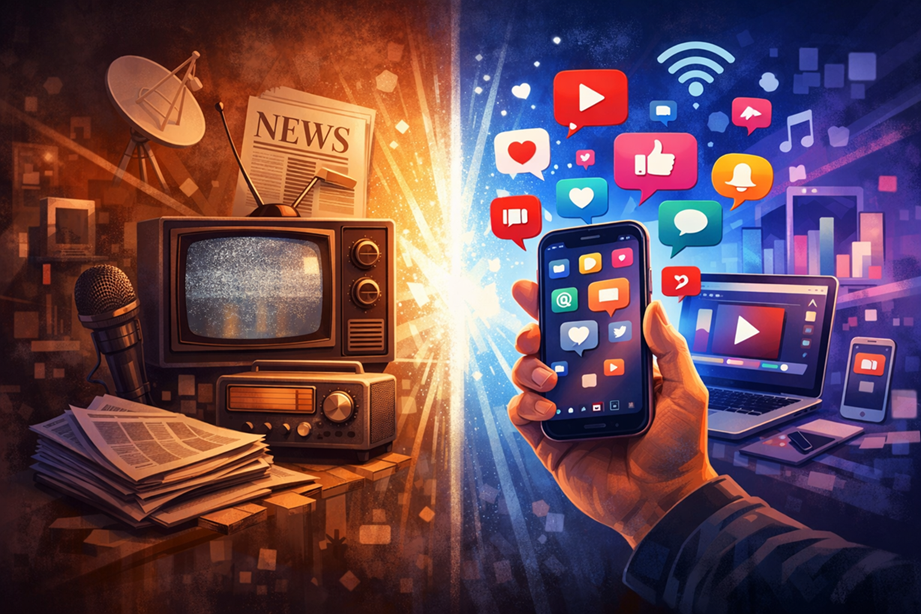
In 2026, the media landscape reached a tipping point. For decades, television, radio, and newspapers were the undisputed kings of information. Families gathered around TV sets for the evening news, commuters tuned into radio stations, and the rustle of newspapers was part of daily life. But this year, a new reality set in: social networks and online video now outweigh traditional media as the primary source of information and entertainment.
The numbers tell the story. More people are scrolling through TikTok, streaming on YouTube, and engaging with Facebook Live than watching prime‑time TV or reading print headlines. Algorithms now decide what millions see first thing in the morning, shaping opinions, trends, and even politics.
This shift isn’t just about convenience, it’s about control and personalization. Online platforms allow users to curate their feeds, interact instantly, and share content globally. Traditional media, with its one‑way communication model, struggles to keep up with the speed and interactivity of digital platforms.
For creators, this is a golden age. A teenager with a smartphone can reach millions overnight, while established broadcasters fight to adapt to shrinking audiences. For consumers, it means endless choice, but also the challenge of navigating misinformation and echo chambers.
The rise of social media dominance in 2026 is more than a technological milestone; it’s a cultural transformation. The world has moved from airwaves to algorithms, and the future of media will be defined not by who owns the printing press or the TV station, but by who controls the digital platforms where billions now live, learn, and connect.