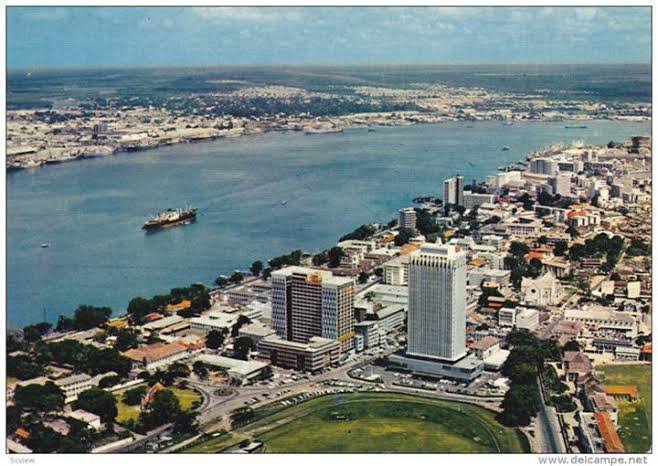
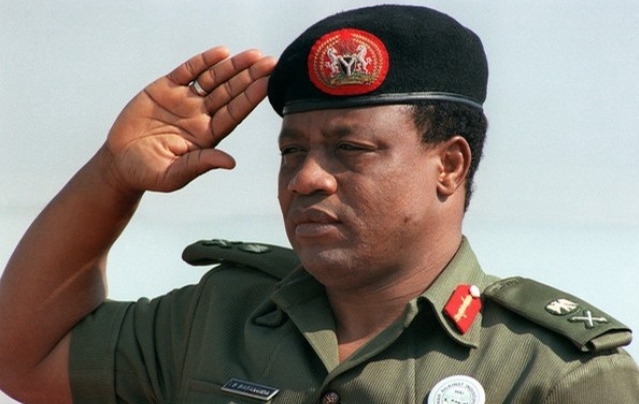

It was around 4am on Sunday April 22nd 1990; Ibrahim Babangida, Military President of Nigeria was about to board a ship to escape to the UK. His government had been overthrown and he had barely escaped from the seat of government; Dodan Barracks with his life. His trusted and loyal ADC; Lt.Col UK Bello had been killed in a hail of bullets; but not before he had ensured his boss was ferried to a private residence somewhere in Lagos for safety. Just as he was boarding the ship; a Corporal in the Army and loyal to the President boldly stepped forward and said "General, sir; with all due respect; you can't leave. We are going to crush these dissidents; and if you leave it will look like you were a coward that ran away".The Corporal was the lone voice speaking this opinion; despite the prevailing circumstances; it took a lot of boldness for a Corporal to speak directly like that to his Commander in Chief.The President’s wife and family had already boarded the naval ship.At that time of day, the odds were strongly against IBB. Dodan Barracks had been taken, contact with his key allay Chief of Army Staff Sani Abacha was not certain.We may never know what convinced IBB, but he stepped off the ship and began working on strategies .Unknown to IBB at that time, that Sunday was not supposed to be the D Day for the coup. The coup plotters led by Gideon Orkar only struck because the coup had possibly leaked. A batch of his men riding in the popular Peugeot J5 buses of those days had been stopped at a police check point. Not knowing what the police would find out, they had moved the coup date back. This led to a thoroughly disorganized coup exactly like the Dimka coup of 1975 which ironically IBB then a Colneal had personally crushed.Tony Nyiam, a Lieutant Colneal had led the onslaught on Dodan Barracks. It is said that he was at the Presidential quarters on a visit to see his friend, UK Bello and they had been playing draft all evening. Unknown to the ADC, Colneal Nyiam had other plans. He was busy spying and somehow removed the firing pins from the armored personnel carriers stationed at Dodan Barracks; this eventually led to the death of UK Bello as when the shooting started, Bello tried to personally take one of the APCs and it didn't work. He was shot dead and his wife says Col Nyiam himself killed his friend, her husband. The Colneal later disputed that account' adding that IBB sacrificed UK Bello.The first gunshots were reportedly fired around 12.30am at Dodan Barracks and the plotters took some of the Armored Carriers on an assault on the Presidential quarters.They took temporary control of weapons and men from the Ojo and Ikeja cantonments, Bonny Camp and Apapa military police armory. But their failure to get their hands on the Army's powerful T55 tanks would eventually be their misfortune as these same tanks would be used to crush them.Many of the men who joined the coup were co opted that morning; some were even released detainees from the guard rooms.By 7am after a long drawn gun battle Dodan Barracks had been deserted with the gates flung open. For the first time ever ; there was no security check point at the Barracks gate.Also for the first time in the history of coups in Nigeria, Government troops battled coup plotters on the open streets. Citizens watched from afar as gun battles raged at the Obalende Bridge well into the late hours of the morning. The great mistake of the Orkar coup was the failure to arrest the strongman of the government; Minister of Defence and Chief of Army Staff Sani Abacha; just like the Major Nzeowgu coup where they failed (or has some have inferred Major Ifejuna chose not ) to arrest General Ironsi.Any coup not complete by 5am in Nigeria is dead on arrival. All successful coups are done by 4am and the speech to the nation is broadcast at dawn.The failure of the coupist to arrest Abacha at the Flag Staff House allowed him to rally troops. One of the first steps he took was to contact as many Commanders as possible to get their commitments of loyalties. By mid day; the Orkar boys had been dislodged from Radio Nigeria in Ikoyi. Major Gideon Orkar had already made a broadcast to the nation at dawn. The Radio station is the most important target of a coup; its where you declare the coup and whoever controls it, controls the narrative and the country.There are two stories about how General Babangida escaped from Dodan Barracks; the first says he was whisked away by his ADC, Lt.Col UK Bello; who then returned to face the rebellious soldiers. The second story was told by the General himself in an interviewMore recently, General Babangida revealed on Galaxy Television, Ibadan that one Captain Kassim Omowa insisted on him leaving or being evacuated from Dodan Barracks. He is quoted as saying: "Omowa insisted that he would fly me out. But on each mention, I told him no because he was too junior to command me......But the young man said: "I am here to do my job. So I must move you out of this place."According to Babangida, Omowa evacuated him via a secret channel to a location (ostensibly a private residence in Surulere) "where I was for some days while the heat remained." Babangida did not shed light on other accounts that he was physically "knocked down" or "grabbed", smuggled via the Ribadu back gate and maze of adjoining buildings and compounds, tucked inside a Volkswagen beetle and hidden at the National Arts Theater, Iganmu from where he made contact with Abacha and others. It has also been reported that one of his bodyguards was later captured by the plotters but did not betray his location. None of this has been confirmed by authoritative sources._By 11am, Commanders from various formations around the country had began to go on air to swear allegiance to President Babangida.Eventually General Abacha proved his loyalty and toughness and crushed the coup. When his men stormed and captured the FRCN station, the microphones were on and the whole country could hear Abacha barking orders " Every body lie down, get down"The unknown Corporal saved Babangida's legacy preventing him from being labeled a coward.Lt.Col UK Bello saved the life of his boss and lost his own.Captain Omowa rescued his Commander in Chief to safety when it seemed the coup had succeeded.Lt. General Sanni Abacha saved Babangida's government when he could have assumed office himself.The coup of April 22nd 1990 was the last coup in the history of Nigeria.Odd Things About The Coup1) It was the frst to involve soldiers, ex soldiers and civilians in planning and execution. All other coups were 100% military,2) First coup to be funded by a civilian. Allegations that MKO Abiola had funded the earlier IBB coup of 1985 makes no sense. IBB was the Chief of Army Staff, he controlled the Army and needed no funding.3) First coup that had no operation outside Lagos. This was probably due to the rush to execute. It was a big mistake.4) All previous coups had one broadcast announcing the take over and one or two more from the leaders of the coup or new Head of State. This was the first coup where several military leaders around the country got on air to declare loyalty and many people were expecting some to declare loyalty to the coupists; but that never happened5) The Speech by Major Gideon Orkar (the face of the coup) announced that the 5 core Northern states would no longer be part of Nigeria until they installed the rightful Sultan ( Maccido) and remove Sultan Dasuki whom many people believe was installed by IBB against the wishes of the people. This was a major bad move as what people said and repeated was the excision of the states from Nigeria; little was mentioned about it been temporary and conditional.6) This was the first coup that played out in real time for the world; people watched and monitored it like a football game; the first coup of 1966 was similar too; but Nzeowgu controlled the country for at least 2 days unlike Orkar"s coup. All successful coups are completed before the nation wakes up, Dimka and Nzeowgu stretched a bit further into the morning too, but not like the April 22nd one..7) Col Ghandi Tola Zidon of the 9th Infantry Brigade is said to have gone to the radio station in jogging outfit on the orders of Brigadier Ishaya Bamaiyi and pretended to be with Major Orkar . He thus got to access things first hand; the exact same thing happened in 1976 when then Col Babangida approached Dimka at the same Radio Station and pretended to be with him, only to return and rout the coupists.Lt Col Nyiam, Chief Great Ogboru ( financier of the coup who was promised the post of Vice President) and Major Mukuro all escaped from the country and are alive today.Following their trial, Major Gideon Orkar and 41 others were executed in July 1990.27 others were executed in September 1990.
Credit: "THE HISTORIAN", AGBONMAGBE REMILEKUN KAZEEM