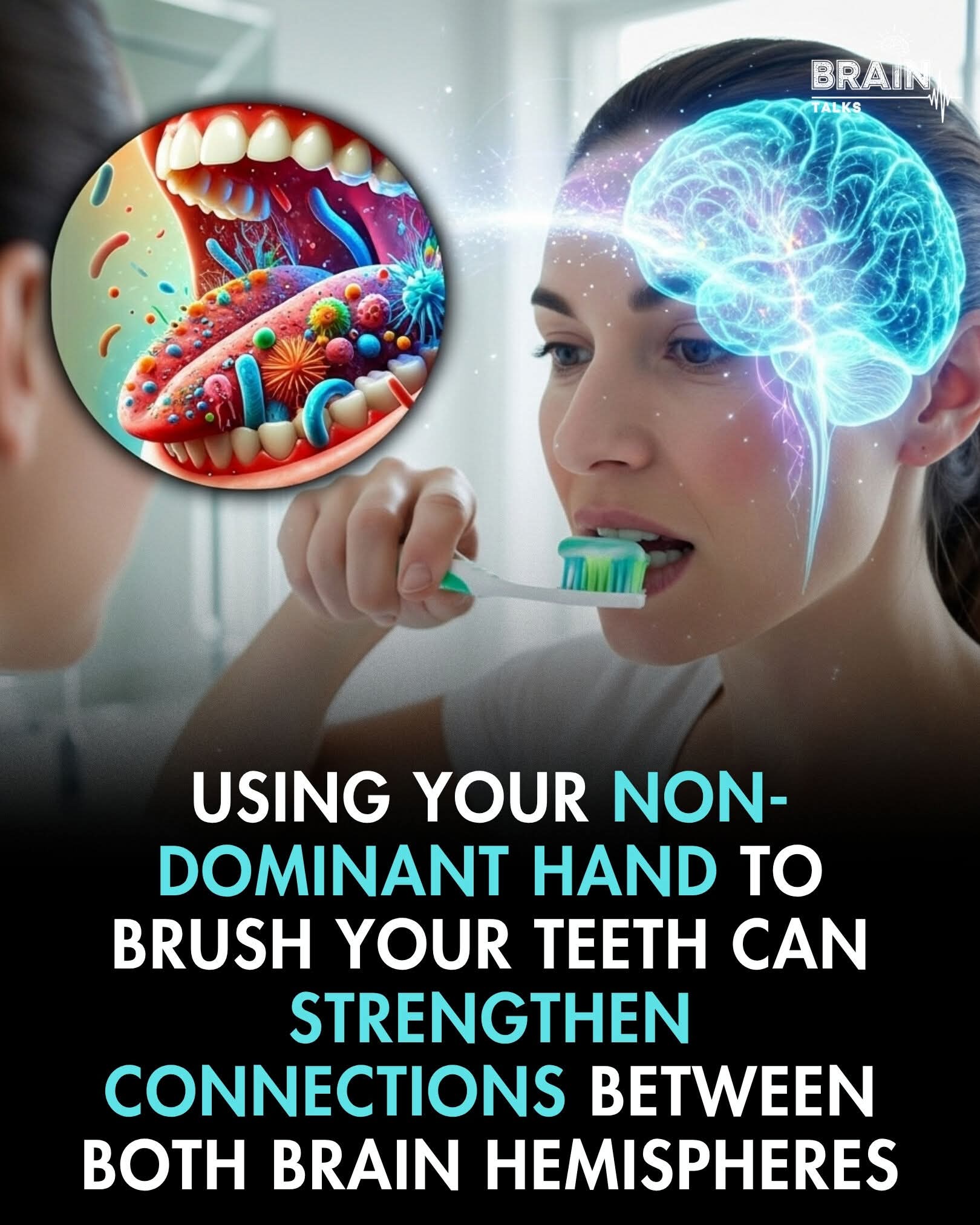

Brushing your teeth with your non-dominant hand is more than a quirky habit; it’s a workout for your brain. This simple act challenges the brain to coordinate movements in ways it isn’t used to, stimulating neural activity across both hemispheres.
The left hemisphere, responsible for logic and routine tasks, works alongside the right hemisphere, which controls creativity and spatial awareness. Using the opposite hand forces communication between these areas, strengthening the corpus callosum, the bridge of neural fibers connecting both sides of the brain.
Regularly performing such activities can improve coordination, cognitive flexibility, and motor skills. Small, everyday exercises like switching hands for brushing, writing, or even eating can enhance neuroplasticity—the brain’s ability to adapt and form new connections.
This technique also encourages mindfulness. Since the action feels unusual, it requires attention, improving focus while breaking autopilot habits. Over time, integrating such practices supports overall brain health, mental agility, and even problem-solving skills.
Next time you brush, try the opposite hand. It’s a tiny change with a surprising impact on brain function, proving that even simple daily routines can boost mental performance.
Source: Brain Talks