
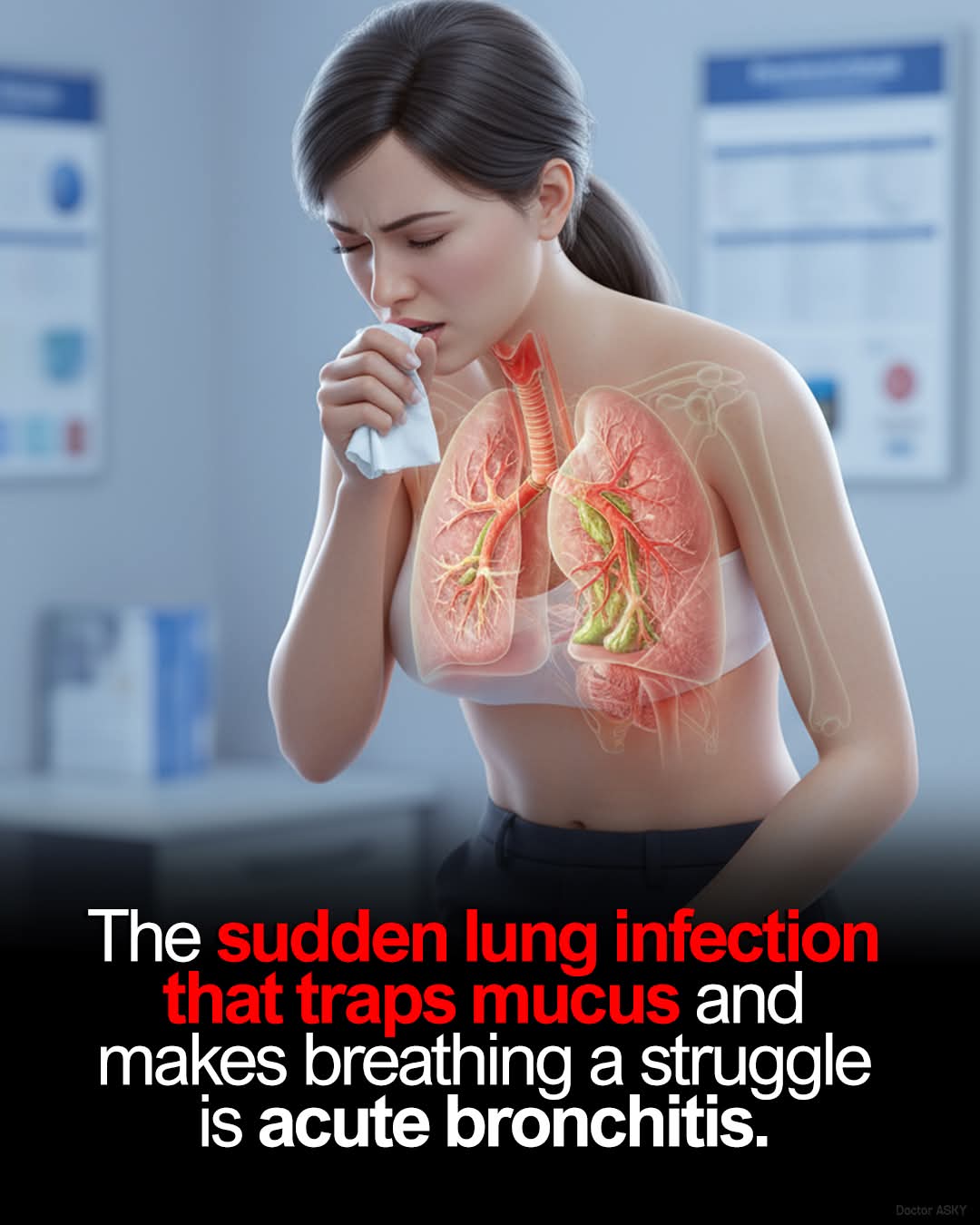

Acute bronchitis is a short-term inflammation of the tubes that carry air to your lungs. Most of the time, it happens because of viruses—the same ones that cause colds or the flu. Sometimes, bacteria can also be responsible, but this is less common.
When these tubes get irritated, they start producing more mucus than usual. This extra mucus makes it hard to breathe and often triggers a persistent cough. The mucus can be clear, yellow, or green. Other symptoms can include chest tightness, wheezing, feeling tired, mild fever, and shortness of breath. These signs happen because your body is trying to fight the infection while your airways are blocked and irritated.
Acute bronchitis usually gets better on its own within a few weeks, but it can be uncomfortable and make daily life harder. In people with other health problems or weaker immune systems, it can sometimes lead to more serious issues like pneumonia or worsen conditions such as asthma or chronic obstructive pulmonary disease.
Even though it is usually temporary, acute bronchitis can feel intense while it lasts, making it important to rest, stay hydrated, and monitor symptoms carefully.
Source: Doctor ASKY