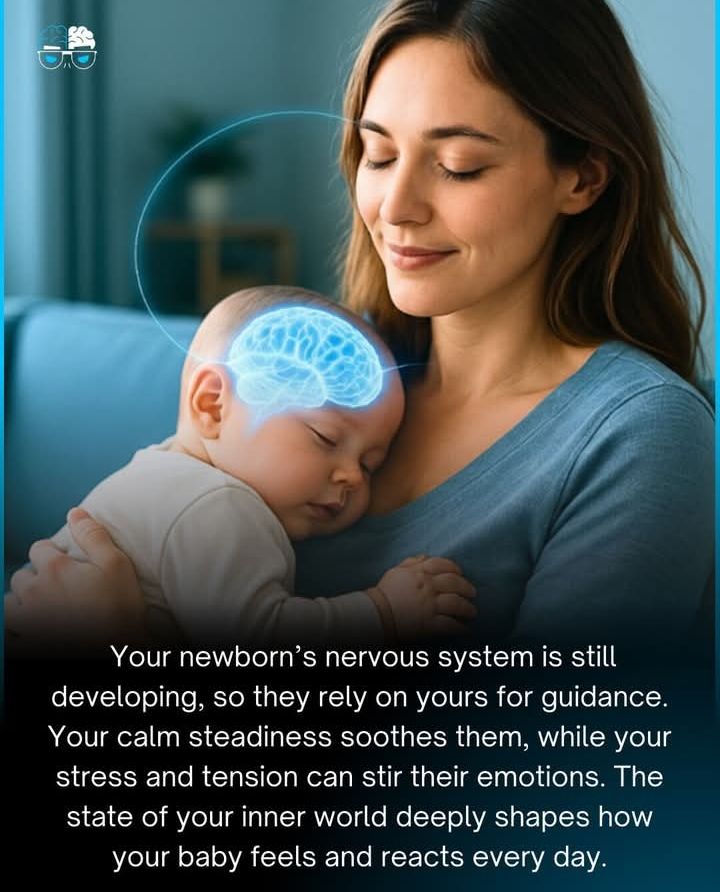

The first weeks and months of life are a time of incredible growth, but your baby’s nervous system is not yet fully mature. This means your little one isn’t just watching you—they’re borrowing from you. Their ability to stay calm, feel safe, and begin to regulate their emotions depends largely on the signals they receive from your own body and mind.
When you are calm, breathing steadily, and feeling secure, your baby senses that stability. Your heart rate, tone of voice, gentle movements, and even the rhythm of your breathing all send messages that the world is safe. This helps your baby’s brain and body settle, lowering stress hormones and supporting healthy development.
On the other hand, when you are anxious, overwhelmed, or rushing from one thing to another, your baby also feels those signals. A racing heartbeat, tense muscles, or a hurried voice can activate their stress response. They may cry more, startle easily, or have difficulty sleeping—not because something is “wrong” with them, but because they are wired to reflect the emotional environment around them.
This powerful connection isn’t meant to create guilt. Instead, it’s an invitation to care for yourself as you care for your baby. Simple steps like taking deep breaths, pausing for a quiet moment, or asking for help when you feel stretched can create a ripple effect of peace. By regulating your own emotions, you’re teaching your baby—long before they can talk—how to handle stress and find calm.
Remember, you don’t have to be perfectly serene. What matters most is being aware and choosing small, consistent moments of calm. Over time, these moments build your baby’s foundation for resilience, emotional balance, and a secure bond with you.
Your well-being is not separate from your baby’s; it’s part of their growth story. Every time you nurture your own calm, you are nurturing theirs too.
Source: Factology