
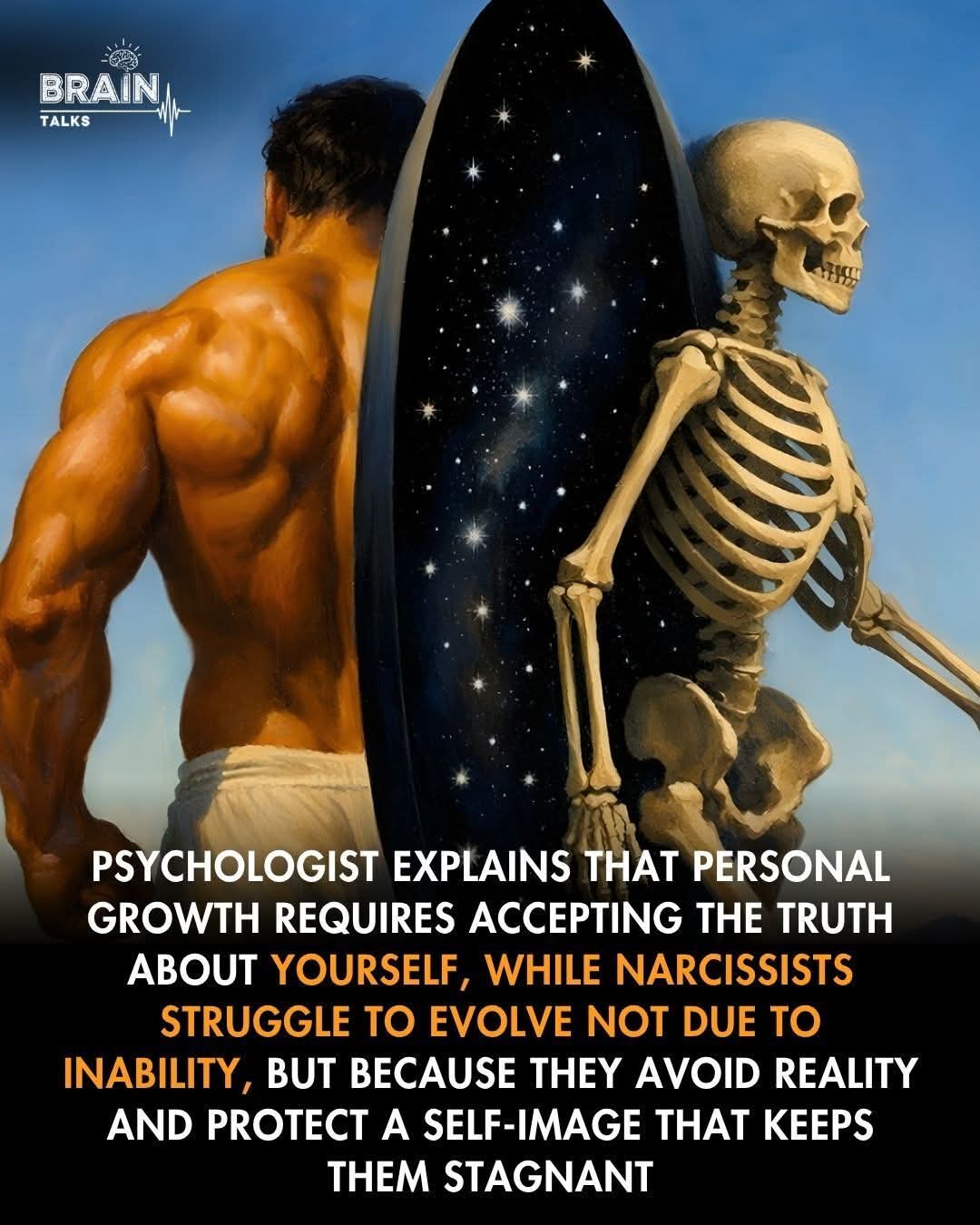

Psychologists emphasize that personal growth and self-improvement depend on the ability to confront honest truths about oneself. Recognizing flaws, biases, and limitations allows individuals to learn, adapt, and evolve. This process requires courage, reflection, and the willingness to face uncomfortable realities.
For narcissists, change is particularly challenging—not because they lack capacity—but because they prioritize protecting a carefully constructed self-image. Admitting mistakes or confronting personal shortcomings threatens the narrative they maintain about themselves, creating resistance to growth.
This avoidance of reality leads to stagnation. Narcissists often deflect responsibility, minimize feedback, or rationalize behavior to maintain the illusion of perfection. While others may use self-awareness as a tool for progress, narcissists struggle to engage with the truths that facilitate real transformation.
Therapeutic approaches suggest that meaningful change requires creating safe spaces where individuals can explore self-reflection without fear of judgment or loss of identity. For most people, facing reality and acknowledging weaknesses is the foundation for emotional maturity, improved relationships, and personal development. Understanding this distinction highlights why some people evolve quickly while others remain stuck. Growth requires honesty and self-acceptance, whereas protection of an inflated self-image limits learning and perpetuates behavioral patterns that hinder progress.
Source: Brain Talks