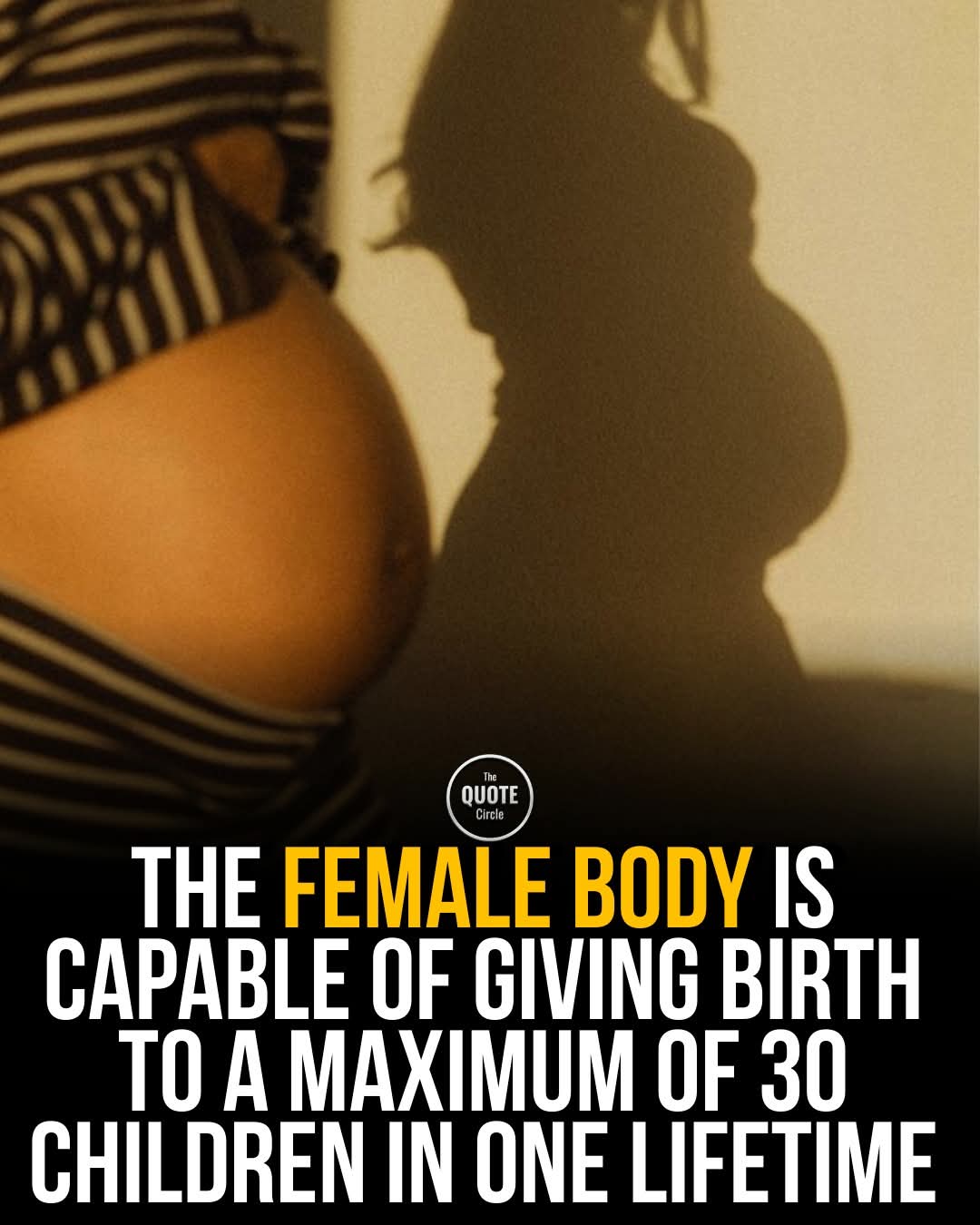

Giving birth to 30 children would be an incredible and extremely rare feat, but there isn’t a strict biological limit that stops the number there. A woman’s reproductive capacity mainly depends on how long she remains fertile, usually around 30–35 years, along with health, recovery between pregnancies, and the possibility of multiple births.
History even shows cases far beyond that number. The most well-known example is Valentina Vassilyeva, an 18th-century Russian woman recorded by Guinness World Records for having 69 children. She had 16 pairs of twins, seven sets of triplets, and four sets of quadruplets across 27 pregnancies.
While numbers like this are extraordinarily rare and physically demanding, they show that the upper limit of human reproduction is shaped more by fertility span and multiple births than by a fixed number.
Source: The Quote Circle