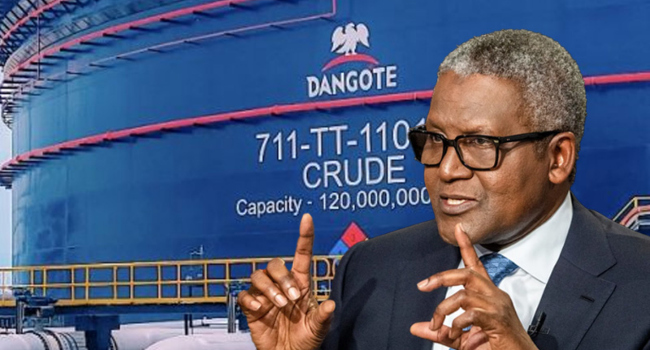

Nigeria’s oil marketers are warning citizens to brace for petrol prices rising to ₦1,500 per litre amid the ongoing US Israel Iran war, but insist that Dangote Refinery remains the country’s lifeline arguing that availability at higher prices is better than outright scarcity.
The Crisis Driving Fuel Prices
- Conflict in the Middle East: Escalating tensions involving the US, Israel, and Iran have disrupted global crude oil supply.
- Impact on Nigeria: International benchmarks have surged, pushing petrol prices in Nigeria from ₦1,200 per litre toward a possible ₦1,500 per litre.
- Global ripple effects: Several refineries abroad have shut down, while China has restricted gasoline and diesel exports, worsening fears of scarcity worldwide.
Dangote Refinery’s Role
- Domestic supply priority: The Dangote Petroleum Refinery has pledged to focus on Nigeria’s needs, insulating the country from global shocks.
- Marketers’ stance: They argue that consistent availability of petrol is more critical than price stability.
- Quote from marketers: “The reality is that the Dangote Refinery is the salvation for us, due to the consistent source of product, which is much more important at this time than anything.”
Why ₦1,500/Litre Is “Better Than Scarcity”
- Scarcity risks: Without Dangote’s output, Nigeria could face empty filling stations, black market exploitation, and economic paralysis.
- Price vs. access: Marketers emphasize that having fuel at ₦1,500/litre is preferable to no fuel at all, as transport, businesses, and households depend on steady supply.
- Economic cushioning: While painful, availability ensures continuity in commerce and daily life, preventing a deeper crisis.
Key Takeaways for Nigerians
- Expect higher prices: Petrol may climb to ₦1,500/litre in the coming weeks.
- Dangote Refinery is critical: It is currently Nigeria’s main safeguard against total scarcity.
- Government & marketers’ message: Citizens should prepare for costlier fuel but take solace in the fact that supply remains steady.
Risks & Trade Offs
- Household burden: Rising fuel costs will strain family budgets, increase transport fares, and push inflation higher.
- Business impact: SMEs reliant on generators will face higher operating costs.
- Policy challenge: The government must balance fuel affordability with ensuring supply, possibly through subsidies or strategic reserves.