
Lawrence Nomanyagbon Anini, who was born around 1960, became one of the most feared and infamous armed robbers in Nigeria during the mid 1980s. His criminal activities were centered in Benin City, the capital of present day Edo State, where he led a violent gang that carried out a series of armed robberies, assassinations, and attacks on security personnel. Anini rose to prominence alongside his close associate, Monday Osunbor, and together they created an atmosphere of fear and uncertainty across the city. Their operations were marked by boldness, careful planning, and a willingness to confront law enforcement directly. At the height of his notoriety, Anini was widely referred to in the press as the “Lawrence of Benin,” a reflection of both his elusiveness and the scale of his criminal enterprise.
Anini’s reign of terror exposed serious weaknesses within the security system of the time. His gang was able to evade arrest for months, partly due to the complicity of corrupt police officers who supplied them with information and protection. This enabled Anini and his associates to operate with unusual confidence, carrying out high profile robberies and assassinations that shocked the nation. Their activities drew widespread media coverage and became a major national security concern, prompting increased pressure on law enforcement agencies to bring an end to his operations.
His criminal career came to a dramatic end on December 3, 1986, when security forces finally captured him at a residence located between 2nd and 3rd East Circular Road in Benin City. He was arrested in the company of a girlfriend who was widely believed to have betrayed his location to authorities. During the operation, Anini was shot in the leg while attempting to evade arrest. He was immediately taken into custody along with several members of his gang and transferred to a military hospital for treatment. Due to the severity of his injuries and medical complications that followed, one of his legs was later amputated.
Following his arrest, the military government of General Ibrahim Babangida ordered that he be prosecuted without delay. His trial attracted intense public attention and was closely followed across the country. Anini was charged with multiple counts of armed robbery, murder, and illegal possession of firearms. The court found him guilty on several of these charges, confirming his role in some of the most violent criminal acts recorded in Benin City during that period.
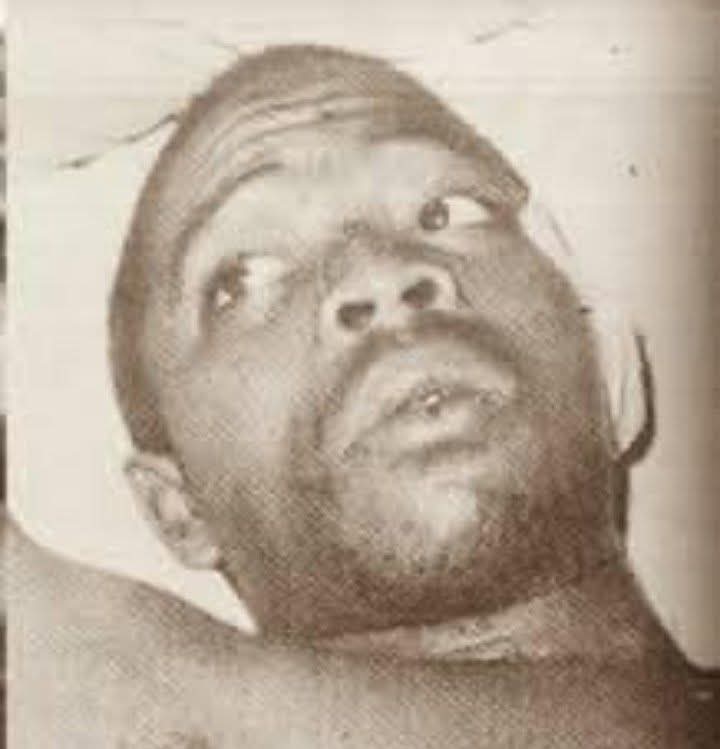
Source On March 29, 1987, Lawrence Anini was executed by firing squad in Benin City. His execution marked the end of a criminal career that had both terrified the public and exposed deep flaws in the nation’s security institutions. His story remains one of the most widely remembered episodes in Nigeria’s criminal history, serving as a powerful reminder of the consequences of organized violent crime and the determination of the state to restore order during a turbulent period in the country’s past.
Source: Actors Guild of Nigeria